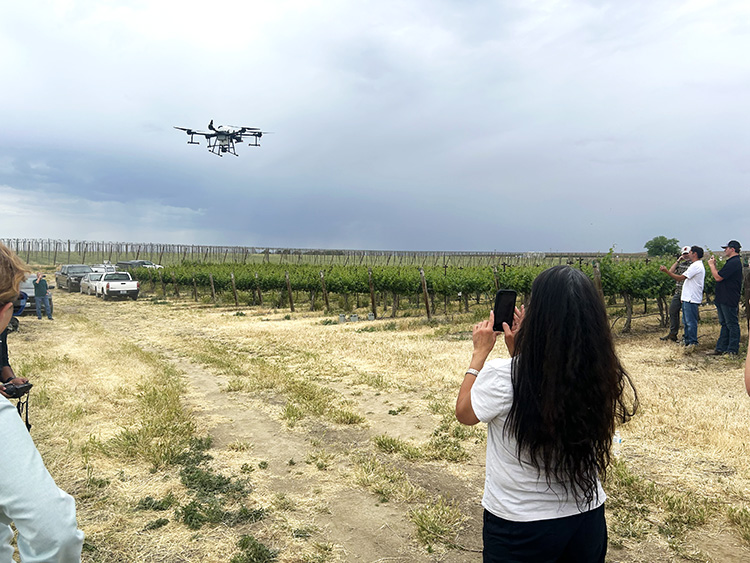
Chairs of the state House and Senate agriculture committees along with other legislators and staff last week got an inside look at research efforts at WSU’s Irrigated Agriculture Research and Extension Center in Prosser.
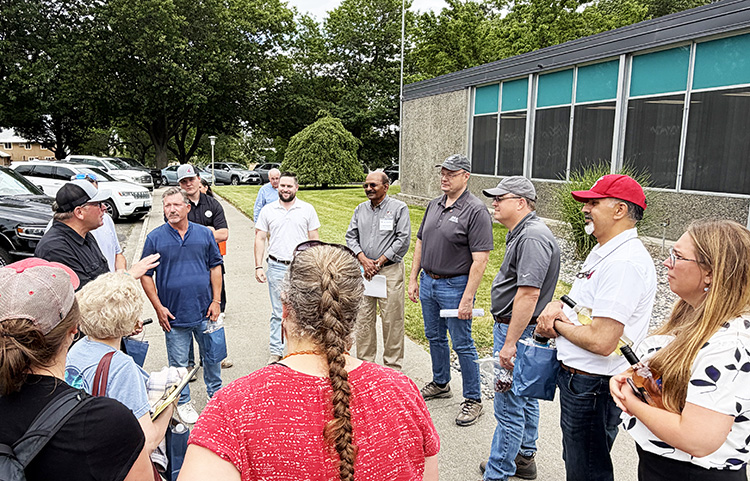
Leadership from WSU’s College of Agricultural, Human and Natural Resource Sciences co-hosted the day-long event with leaders from the state’s agricultural industry, the second most diverse in the country. Participants began their day talking through the college’s broad agricultural research portfolio. As the research and development arm for Washington’s agricultural industry, WSU has research installations spread across the state — from large research stations in Prosser, Wenatchee, Puyallup and Mount Vernon to smaller units at Lind, Davenport, Long Beach and Othello — and Extension offices in every county.
Participants, including leaders from the Washington State Department of Agriculture, were able to sample the Sunflare apple, the latest to be developed by WSU breeders and still several years out from hitting grocery stores. They also sampled what will be WSU’s first new cherry cultivar in two decades. The still-unnamed variety currently goes by R-19 and is about five to six years from being available to consumers.
They also walked through the WSU Prosser site to view a machine utilizing AI to sort cherries and observe some of the university’s considerable deferred maintenance needs.
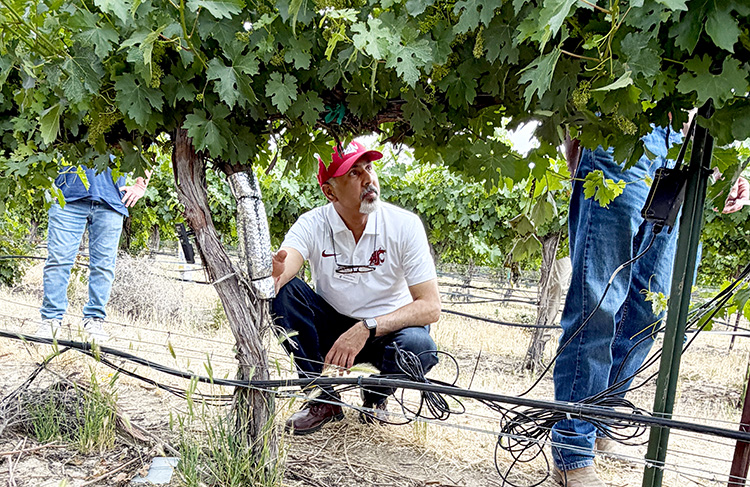
Later, the tour winded through the Roza Farm where faculty and Extension agents showed off modern technologies that can be applied to address challenges faced by growers in the Yakima Valley. These innovations included regulating how much water is supplied to individual wine grape plants, a demonstration of how drones are used to most effectively monitor crop development, and how modern sprayer technology can reduce pesticide drift and curbs overuse of pesticides using lidar laser sensing that sprays only precisely where needed. The tour also heard about developments in the Soil Health Initiative, which features long-term research sites at six locations in varying agroecological climates throughout the state.