Legislators, tribal members and aquaculture stakeholders gathered at the WSU Puyallup Research & Extension Center on Friday to learn about a tire compound discovered to have a lethal impact on aquatic life, at an event coordinated by Seattle Public Utilities and Representative Zach Hall.
The compound, 6PPD, is used to prevent tire degradation and was discovered to be toxic to salmon and other aquatic species in 2020 by WSU Professor Jen McIntyre and her colleagues at the Washington Stormwater Center. They discovered that when exposed to atmospheric ozone, 6PPD becomes a highly toxic chemical known as 6PPD-quinone that is a leading cause of salmon mortality in streams throughout the Puget Sound. “It is the deadliest known toxin to aquatic life,” McIntyre told the group on Friday morning.
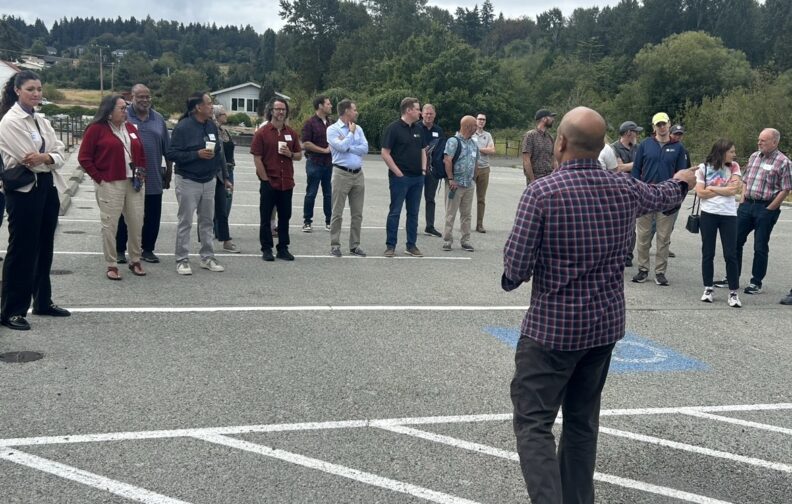
Current intervention methods, known as green stormwater infrastructure, were showcased by WSU Professor Ani Jayakaran during the visit at demonstration sites at the Center. This included permeable pavements, rain gardens, and other filtration methods that remove 6PPD-quinone and other hazardous chemicals from stormwater before it reaches waterways and aquatic species.
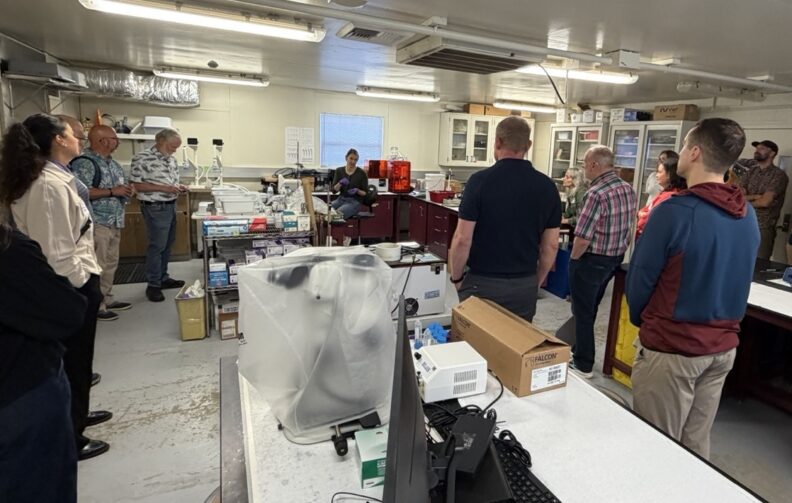
The group had a chance to visit the Salmon Research Lab located at the Center, where graduate students shared about projects to understand the broader impacts that the tire compound and other toxins like rodenticides on aquatic and human health.
The program also included time for legislators to discuss potential policy interventions, hear from tribal leaders, and learn about efforts from chemical companies to develop safer alternatives.