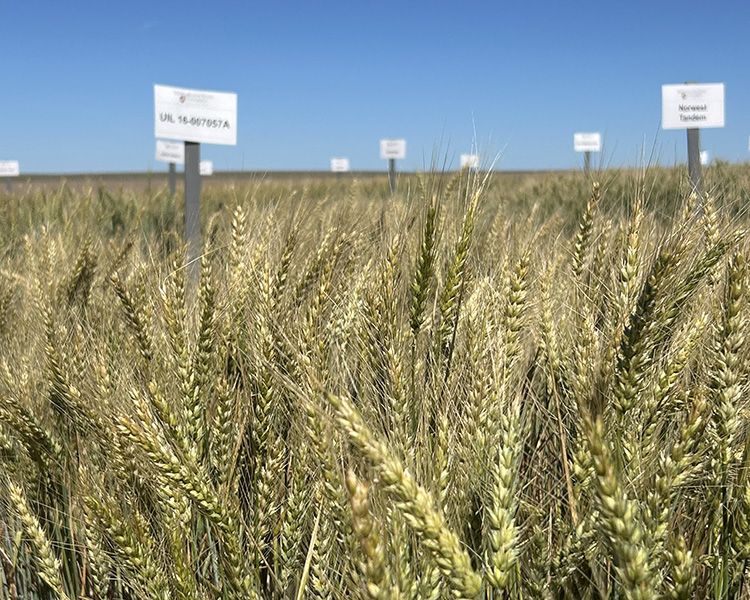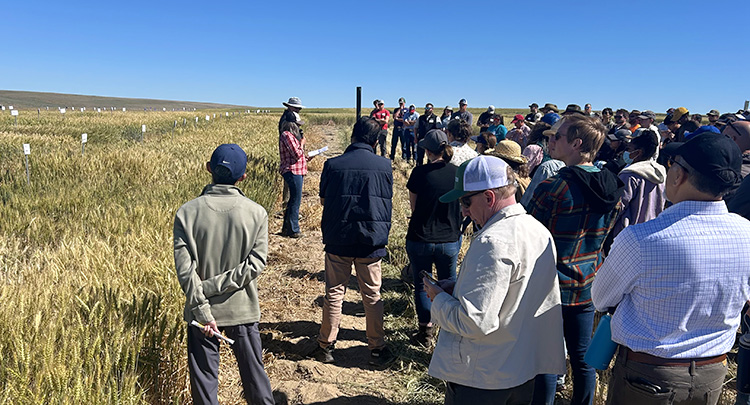
More than 250 producers and other visitors descended upon WSU’s 1,300-acre dryland wheat ranch in Adams County for the 108thAnnual Lind Field Day last week. Among attendees were representatives of U.S. Sens. Patty Murray and Maria Cantwell, U.S. Rep. Michael Baumgartner, and Gov. Bob Ferguson.
The research station, which opened in 1915, receives an average of just 9.6 inches of rain per year, fewer than any other state or federal dryland research site in the country. The annual pre-harvest field day gives ranchers the opportunity to hear about the latest research to increase yields, suppress disease, and advances in agricultural technologies. WSU and USDA scientists answer questions, share what they’re hearing from growers, and discuss findings from university research fields. They seize upon the challenges reported to them to produce solutions.
“Your worst nightmare is my dream come true,” WSU Extension Agronomist Morgan Menaker told visitors. As a member of WSU’s Dryland Cropping Systems Team, Menaker works with specialists across multiple disciplines to help growers solve a wide range of crop challenges.
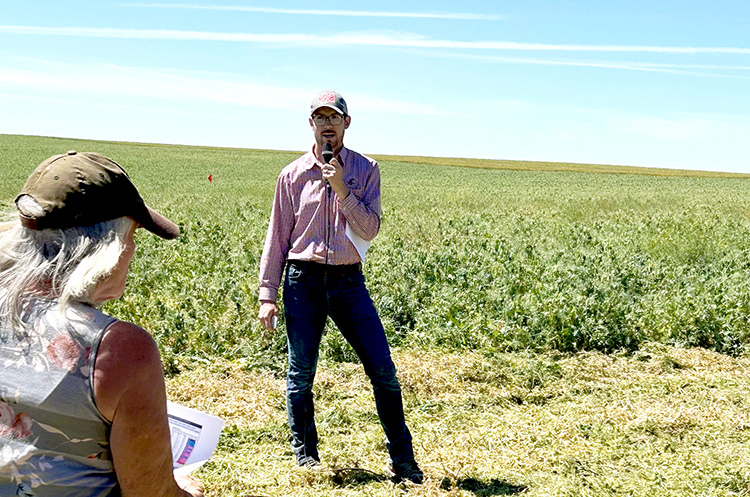
A sampling of the conversation demonstrates the breadth of what WSU scientists are depended upon to know:
- Questions were asked regarding whether there is a natural predator for the Cabbage Seedpod Weevil — which decimates canola crops — and whether crop rotation helps (it doesn’t).
- Windust, a soft white winter wheat variety developed by WSU, is showing itself to emerge early and quickly, making it a good option in the driest climates. Its tall height also supports weed suppression, by shading out lower-canopy weeds.
- One question centered on whether human waste is a productive soil amendment to improve crop quality. A nine-year-old WSU study showed improved yields, but left unresolved questions about plant quality and efficacy relative to other soil additions.
- A direct nexus between the presence of powdery mildew and combine fires hasn’t been confirmed but it’s concerning that so many fires are occurring where powdery mildew exists.
While Lind Field Day is among the most popular, it is just one example among a series of field days and crop tours organized by WSU across the state, including events in Mt. Vernon, Pullman, Othello, and Davenport.